
Mentor Coaching vs Assessment: These Are the Lessons, Not the Test
What is the difference between mentor coaching and assessment?
Assessment hands back a verdict: did a coach’s recorded session show the International Coaching Federation competencies at their credential level? Mentor coaching uses the same evidence to develop the coach, in a conversation about the behaviors behind their words. Judgment stays, since ICF names formative appraisal as a mentor coaching competency, but the coach does the work.
For years in my coaching career, assessing a coach’s recording and mentoring that coach were one act for me. I reviewed the recording, and then I went over the assessment with the coach. That is the work of an ICF mentor coach in the sense I mean here: reviewing a coach’s recorded sessions on the way to International Coaching Federation (ICF) certification at the Associate Certified Coach (ACC), Professional Certified Coach (PCC) or Master Certified Coach (MCC) level. It is mentor coaching as part of coaching education. Workplace mentorship and the wider coaching and mentoring comparison are a different subject.
What changed my mentoring happened while we were building our course for the ICF Mentor Coach Specialization (MCS). I’ll describe what I added, how an individual mentor coaching session runs now, why experienced mentors slide back into assessing, and what the Competency Review Form still records.
Key Takeaways
- Assessment hands back a verdict. Mentor coaching uses the same evidence to develop the coach.
- ICF asks for written feedback anchored in observable evidence. The behavior I write beside each piece of evidence is my addition.
- The form becomes a point of reference, and the coach does the classwork.
- Mentors slide back into assessing because they want to help, and a real conversation takes more energy.
- The Competency Review Form still records the evidence. I treat it as a place of focus.
The Difference Between Mentor Coaching and Assessment
Assessment answers one question about an observed or recorded coaching session: did the coach demonstrate the competencies at the level they are working toward? It is a judgment based on the ICF Core Competencies at one credential level, and the assessor hands back the answer with the evidence for it.
Judgment stays in the room. The six ICF Mentor Coaching Competencies describe mentoring a coach, a different framework from the eight ICF Core Competencies a coach uses with a client. The fourth, Conducts Formative Appraisals, “Evaluates the degree to which the mentor coaching client’s coaching aligns with ICF Core [Competencies].” The fifth, Facilitates Client’s Skill Development, “Supports the mentor coaching client’s development of coaching skills, and unique coaching style.”
So appraisal is part of the job, though not a workplace performance appraisal: in mentor coaching, the evidence becomes the start of the coach’s development.
| What differs | Assessing a recording | Mentor coaching |
|---|---|---|
| The question | Did the coach demonstrate the competencies at their level? | What was the coach doing, and what will they work on? |
| What it hands back | A verdict, with timestamps and quotes as proof | The same evidence, plus the behavior behind it |
| The form’s role | The result | A point of reference for a conversation |
| Who does the work | The assessor | The coach, with the mentor coach |
What the Mentor Coaching Requirement Asks a Mentor to Write
Mentor coaching is a requirement on the way to an ICF credential, and our page on what ICF requires of mentor coaching sets out the details. On feedback, ICF’s Mentor Qualification Handbook describes verbal and written feedback from the mentor coach for each session, about the client’s strengths and development areas.
ICF’s guidance on written feedback asks for at least two competencies named as strengths and two as development opportunities. Each is tied to a specific behavioral statement or marker and anchored in observable evidence, and the guidance says to “avoid language that reflects personal preference, bias, personality judgments, or pass/fail conclusions.” That is the requirement ICF sets. The behavior I now write beside every piece of evidence is my addition to it.
Where My Mentor Coaching Approach Came From
My mentor coaching approach started inside a coach training program, where I was an instructor who also assessed the coaches’ recordings. It was an assessor’s approach, the way I was taught to mentor, and it stayed that way until we built our Mentor Coach Specialization course.
How I Became a Qualified Mentor Coach
Many mentor coaches do their work inside accredited programs, as instructors and mentor coaches. That’s one avenue, and it’s where I started. I began mentor coaching because I was an instructor in a program. As an instructor I had to give feedback, and I decided I could also do the mentor coaching and assess the recordings.
To be qualified, I had to take ICF’s training on the ACC BARS (Behaviorally Anchored Rating Scales) and the PCC Markers. I also worked with an outside mentor coaching community, did some training with them and swapped some mentoring, so I’d have more external experience. By the time I opened my own company, I was already experienced enough to do the work within our school. How many people have I mentored? It’s a guess, but around 200 to 300.
Assessing Recordings Against the ACC BARS and the PCC Markers
I was an assessor for the schools, so it was all one thing: I assessed the recording, and I did the feedback as a mentor coach. The assessment was the mentoring. That was the way I was taught to do mentor coaching.
The work was reading coaching recordings against the ACC BARS or the ICF PCC Markers, measured against ICF standards for the level the coach was working toward. Then the mentoring went over the result. I was really focused on the assessment part. Here’s what you did, here’s the timestamp, here’s the quote, here’s all the proof. Here are the things you said that met the competency.
For coaches on the portfolio path, I’ve written separately about how the 2027 change reshapes the mentoring relationship. What I want to name here is the part I was missing.
What I Started Writing Beside Every Piece of Evidence
What I realized while we were building our mentor coaching course was that I had been focused on being an assessor. What I wasn’t doing, and what I figured out through that process, was behavioral feedback.
Learn to Give Behavioral Feedback
Our Mentor Coach Specialization training program teaches mentors to name the behavior behind each piece of evidence and turn the form into a conversation.
After I put it in place, I realized ICF didn’t actually ask for what I realized. It was my interpretation of what they asked. It’s better for the client, and it actually makes mentor coaching a whole lot more fun. So I kept it, and that’s what I’m teaching mentors to do.
I didn’t stop doing anything. I started.
For every piece of evidence I put on the form we fill in to give them feedback, I put the timestamp and the quote that is the evidence, and I also describe the behavior they’re doing.
On one line of the form, the timestamp shows where it happened in the recorded coaching session and the quote shows the coach’s words. The behavior names what the coach was doing in that coaching interaction, such as following the client’s language or holding their coaching presence, in alignment with the ICF Core Competencies at their level.
What this changed is that the mentee is now learning which behaviors are strengths and which are below competency, so they can focus on behaviors regardless of how they ask the question. It’s the behavior. It’s the mindset.
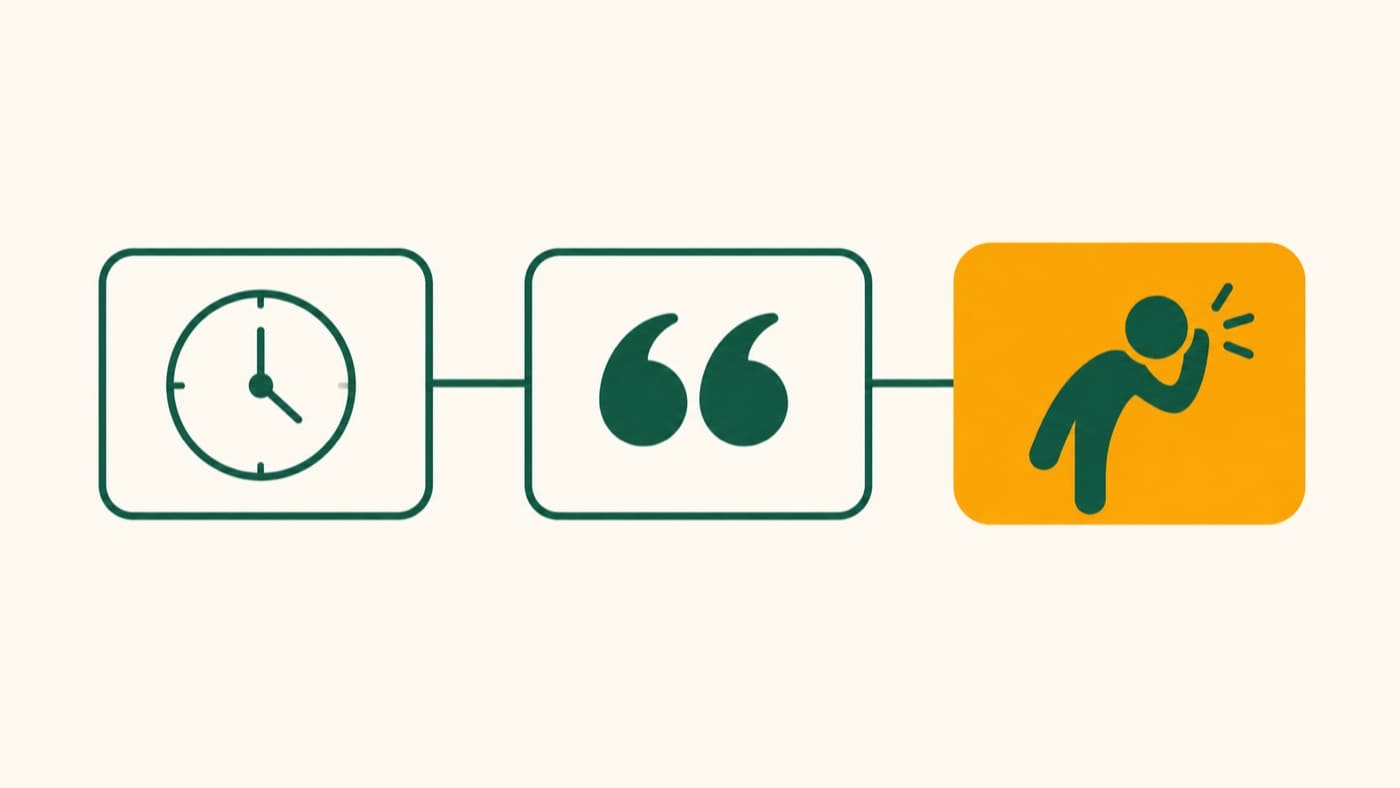
Giving them behaviors gives us somewhere to have a discussion. When we only talk about the words they said, it really ends up being that assessment: this met, this met, this met, you could have done this better. When we start talking about behaviors, we’re talking about who they are as a coach, how they show up as a coach and how they interact with their clients. It’s a much more exciting conversation, and a lot less boring than matching the thing to the competency and telling them yes or no.
Naming the behavior under the words is also how I teach mentor coaches to give feedback, and I wrote about that skill in what makes a good mentor coach.
Running the Session as Classwork
When I was treating mentor coaching like an assessor, it was, “So here’s all the things you did.” It was about learning, but it wasn’t about bigger growth. It was focused on how they display the competence they need to display, and how they learn to display that competency.
The old session was built around a verdict on the recording. Now it’s about how I help you grow as a coach, and there is no pass or fail. The form I’m filling in is a tool that helps us have a conversation about your growth and development and about how you show up as a coach. The document becomes a point of reference for our discussion, so it’s more like a coaching conversation.
Now I’m more like, “Let’s talk about this competency. Here are the things you did. Let’s talk about what was challenging for you. Let’s talk about how you think you did.” Instead of going over your test score, it’s a conversation, and they figure it out. When a coach keeps asking closed questions, I ask, “How would you word this as an open question?”
It’s letting them do the work, rather than me grading their test and them applying the corrections. It’s more about learning. These are the lessons, not the test. I’m not handing back your graded test. We’re actually doing your classwork.
In one-to-one mentor coaching, the hour belongs to the coach’s learning, with the form open beside the conversation.
Why Experienced Mentors Slide Back Into Assessing
Because they want to be helpful. They want to actually help the mentee know how to do it better. And because they’re mentoring, they should provide their own knowledge, expertise and competency to help the coach grow.
A credentialed coach who mentors brings their whole coaching background into the session, and that expertise belongs there.
I think the challenge comes when they’re doing it from a place of assessment: this met, this didn’t, you need to do this instead. That pull sits close to one of the mentor coaching mistakes Alex Kudinov has written about: directing the coach toward an answer.
How do I catch myself doing it? I think it’s easy to fall back into, “Let me just go over the feedback with you,” rather than, “Let’s take time. We’ve got a whole hour. Let’s take our time and have a discussion, and we’ll touch on the feedback as we go along.” It takes a lot more energy to have that kind of conversation than it does to pull up the form and say, “Okay, here’s what you did. Here’s what you should have done. Go home. Go practice.” So it’s energy management and self-management.
That approach to mentoring asks a mentor to treat the mentee the way a professional coach treats a client. Give your mentees the same level of care and focus you would give your clients.
They are clients. They’re just a different kind of client.
ICF’s own term for the people we mentor is mentor coaching clients. A mentee is a colleague in the coaching profession and a client at the same time. The first Mentor Coaching Competency, Models and Promotes Ethical Practice, “Models ethical standards and encourages the mentor coaching client to do the same.” Ethics, care and focus apply in the mentoring room as they do with any coaching client.
A Place of Focus on the Way to an ICF Credential
A conversation does not remove the record. To complete the mentor coaching requirement for an ICF credential, ICF sets a minimum of three Session Observation Forms and one Competency Review Form for each mentoring client, and ICF has said the three observations must come from three different sessions. The Competency Review Form records whether there was enough evidence that the coach demonstrated the coaching competencies required at their credential level, whether that is an ACC credential, a PCC or an MCC. It is part of the ICF credentialing process.
Really take to heart that you’re not evaluating. I know it feels like we’re evaluating and saying, “Yes, they’re ready,” or “They’re not ready,” so yes, it’s confusing. But think of the Competency Review Form not as an evaluation, not as pass or fail, but as a place of focus where the mentee and I can have a conversation. Then they take that with them, and they’ll have the information to keep using that feedback.
The coach’s own reflection is part of the record too. ICF’s Handbook makes the mentoring client’s reflection on their demonstrated coaching skills and areas for further growth a required element, on the Session Observation Forms themselves. That is reflective practice for the coach.
Alex Kudinov and I hold the Mentor Coach Specialization at all three levels, and every mentor coach on our team holds it at the level they mentor. Behavioral feedback is what I’m teaching mentors to do in Tandem’s Mentor Coach Specialization training program, the full mentor coaching program for coaches already serving as a mentor coach and for those building mentor coaching experience. For what the specialization asks at each level, start with our overview of the Mentor Coach Specialization, and if you are weighing it for your own coaching practice, read whether the specialization is worth it. Tandem’s free forms for each level are our own versions of the Session Observation Form and the Competency Review Form, so check ICF’s current materials before relying on them.
Think about your last feedback conversation with a mentee. Which part was going over a test score, and which part was classwork?
Questions About Mentor Coaching and Assessment
Is mentor coaching an assessment?
It includes an appraisal, but its purpose is the coach’s development. ICF lists Manages the Mentor Coaching Process, Conducts Formative Appraisals and Facilitates Client’s Skill Development among its six Mentor Coaching Competencies. In my mentoring, the appraisal starts a conversation about the behaviors behind the evidence, and the coach does the work.
Does ICF require behavioral feedback?
ICF asks for written feedback that names at least two competencies as strengths and two as development opportunities, each tied to a behavioral statement or marker and anchored in observable evidence. Writing the behavior the coach was doing beside every piece of evidence is my interpretation of what ICF asked. I kept it because it is better for the mentee.
Does a mentor coach still say whether a coach is ready?
When coaching professionals engage in mentor coaching toward one of the ICF coaching credentials, the Competency Review Form still records whether there was enough evidence that the coach demonstrated the competencies at their level. It feels like evaluating, and I treat the form as a place of focus for the conversation.
Is written feedback still required when the session is a conversation?
ICF’s Mentor Qualification Handbook describes verbal and written feedback from the mentor coach for each session, so the written record stays. If you are the coach getting feedback on your coaching, the written feedback is what you take away, and the conversation is where you work with it.
These Are the Lessons, Not the Test
Tandem’s Mentor Coach Specialization training program is accredited under ICF’s Advanced Accreditation in Mentor Coaching. Cherie Silas, MCC, teaches mentors to give behavioral feedback and to run the session as the coach’s classwork.
Explore the Program →