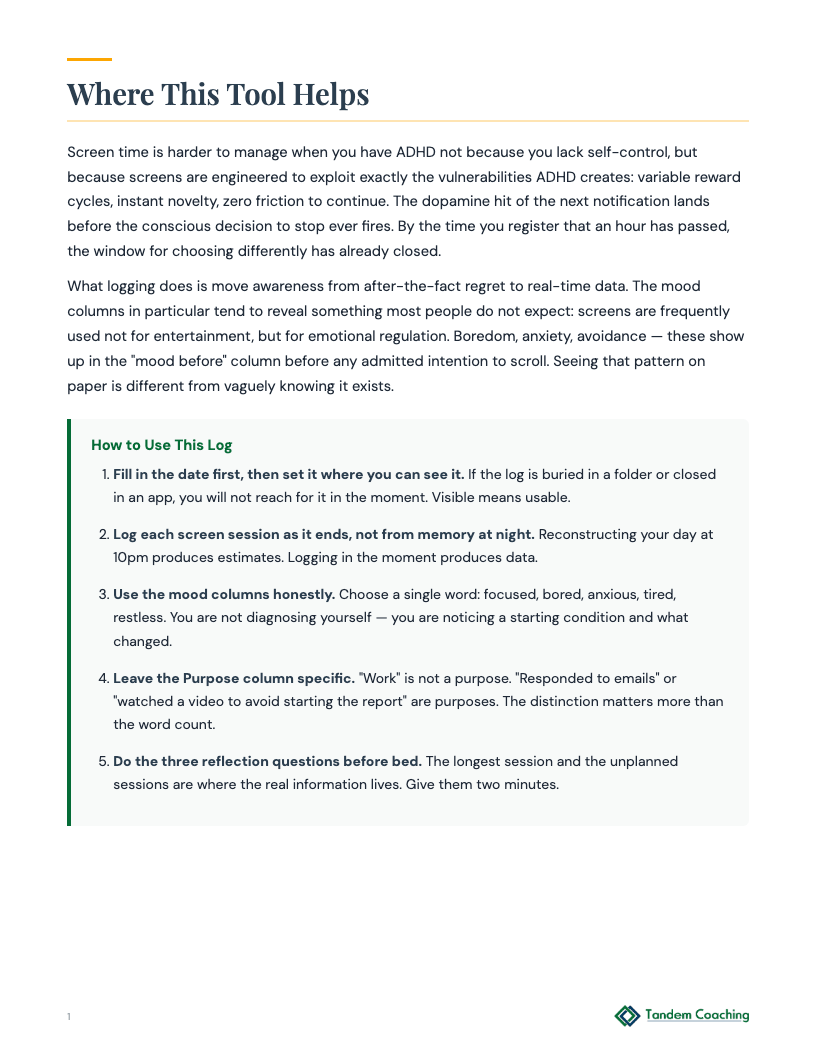
Daily Screen Time Log

Pathway Builder 🔒
Domain
ADHD
Type
Tracker
Phase
Action
Details
5 min Between sessions As-needed
Topics
Habits Time Management Executive Function

Built for ADHD brains – structured support for executive function challenges.

When to Use This Tool
ADHD adult who wants granular same-day data on screen use to catch drift before it becomes a pattern
A client who is building awareness of how many times they pick up their device versus how long each session runs
Person whose weekly report from their phone doesn't give enough detail to see what's actually happening
How to Introduce This Tool

Use this log on any day you want a detailed read of what's actually happening with your screen use - the number of pickups often tells a different story than total minutes.

Download This Tool

Free PDF - print-ready, professionally formatted

Download Free PDF
Preview Tracker · 5 min

For the Coaching Practitioner

Coaching Scenarios Plus
1 Remote team lead whose afternoon focus crashes after lunch scrolling
Context

Engineering team lead managing distributed developers. Reports sharp productivity drop after lunch, blames post-meal energy dip. Actually spends 20-45 minutes scrolling news and social media after eating, then struggles to regain technical focus for code reviews and architecture decisions.

How to Introduce

Frame as a focus forensics tool, not screen time shaming. 'Let's track what happens in that afternoon window when your brain goes offline.' ADHD clients often resist because they already feel guilty about phone use. Emphasize you're looking for patterns, not policing behavior. The mood columns will reveal whether scrolling is avoidance or genuine break-taking.

What to Watch For

If they log duration but leave mood columns blank, they're avoiding the emotional data. Watch for underestimating session length - most people think 15 minutes when it's actually 35. If Purpose column stays vague ('checking updates'), they're not ready to see the avoidance pattern yet.

Debrief

Start with the afternoon time block where they report the crash. Ask: 'What does the mood shift from before to after tell you?' Don't analyze the scrolling - analyze what state they were trying to change. Then: 'What would a 5-minute break look like versus a 30-minute one?'

Flags

If every screen session shows mood deteriorating (anxious to more anxious, tired to exhausted), the phone isn't providing regulation - it's making things worse. Severity: moderate. This suggests the client needs alternative regulation strategies before screen time management will stick.

2 Sales director who checks phone during client calls and can't stop
Context

Regional sales director with ADHD managing key accounts. Keeps phone visible during video calls and finds herself checking messages mid-conversation with clients. Knows it's unprofessional but can't seem to control the impulse. Worried about losing credibility with major accounts.

How to Introduce

Position as impulse mapping, not behavior modification. 'We're going to track the urge, not judge the action. Every time you reach for the phone during a call, log what was happening in that exact moment.' Expect resistance about logging during work hours. Suggest using phone notes app for immediate capture.

What to Watch For

Look for patterns around call types - does it happen more in status update calls versus negotiation calls? If she logs the reach but not the actual phone use, she's catching the impulse, which is progress. Empty Purpose columns during work hours usually mean the checking is purely compulsive.

Debrief

Focus on the moments right before the reach. 'What was happening in the conversation when you felt the pull to check?' Usually reveals specific triggers - silence, technical details, or client pushback. Then explore: 'What does your brain need in those moments that the phone seems to provide?'

Flags

If she reports checking phone but has no memory of what she looked at, or if checking happens during high-stakes conversations she can't afford to derail, this may indicate impulse control beyond typical ADHD management. Severity: high. Consider whether additional ADHD treatment support is needed.

3 Marketing manager who uses phone to avoid difficult conversations with her boss
Context

Marketing manager at a startup facing budget cuts. Has been putting off a conversation with her CEO about resource needs for Q2 campaign launch. Finds herself reaching for phone whenever she thinks about scheduling the meeting or drafting the email.

How to Introduce

Frame as avoidance archaeology. 'Let's see what your phone use tells us about what you're not doing.' Don't mention the boss conversation directly - let the pattern emerge in the Purpose column. Some clients will immediately connect avoidance to phone use; others need to see it on paper first.

What to Watch For

Watch for phone sessions that happen right after she opens email or looks at calendar. If Purpose column shows 'break' or 'checking updates' but timing correlates with work avoidance, the phone is serving as an escape hatch. Duration matters less than frequency in avoidance patterns.

Debrief

Start with timing patterns. 'I notice three phone sessions happened right after you opened your laptop in the morning. What was on your mind in those moments?' Let her make the connection to avoidance. Then ask: 'What would happen if the phone wasn't available in those moments?'

Flags

If avoidance pattern is rigid - phone use happens every single time she encounters the avoided task - and she reports feeling unable to sit with the discomfort even briefly, this suggests anxiety that may need direct attention before productivity coaching. Severity: moderate.

4 Operations director whose evening phone use prevents morning executive function
Context

Operations director at manufacturing company. Reports feeling mentally sluggish in morning meetings, difficulty making decisions before 10am. Doesn't connect this to spending 1-2 hours on phone before bed, which delays sleep and creates morning cognitive fog.

How to Introduce

Present as a sleep-cognition experiment. 'Let's track evening screen time alongside morning mental clarity for a week.' Many clients resist connecting phone use to next-day performance. Frame the evening mood tracking as particularly important - what state is the phone creating before sleep?

What to Watch For

Evening sessions that start as 'relaxation' but mood after shows 'wired' or 'restless.' If she logs ending phone use but doesn't track actual sleep time, she's missing the connection. Watch for morning sessions that happen before coffee or breakfast - these usually indicate sleep debt.

Debrief

Map evening phone mood to next morning energy. 'You logged feeling relaxed before phone time at 9pm, then wired afterward at 10:30pm. How did you feel at 8am the next day?' Help her connect the dots between evening stimulation and morning fog. Ask: 'What would wind-down look like without the phone?'

Flags

If evening phone use consistently extends past midnight and morning cognitive issues affect job performance or safety decisions in manufacturing context, sleep disruption may need medical attention. Severity: moderate to high depending on safety implications.

Tool Flow
Requires
  • None - standalone tool
Produces
  • same-day screen session log with mood ratings
  • app-by-app duration and purpose record
  • daily reflection on unplanned screen use

Pairs Well With

ADHD

ADHD Brain Dump

ADHD adult who feels overwhelmed by competing demands and can't prioritize what to work on first
15 min Worksheet
ADHD

ADHD Digital Declutter Checklist

ADHD adult whose digital environment is disorganized and adding cognitive load

30 min Checklist
ADHD

Sweeping Scheduler

Person with ADHD who does all their cleaning in one exhausting weekend burst

15 min Planner

Related Articles

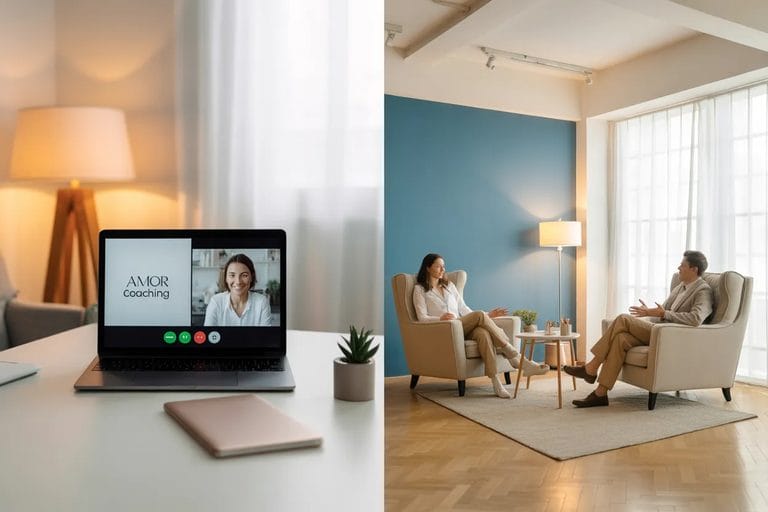
Remote vs In-Person ADHD Coaching: What Works Best?

Remote vs In-Person ADHD Coaching: What Works Best?

Read article →
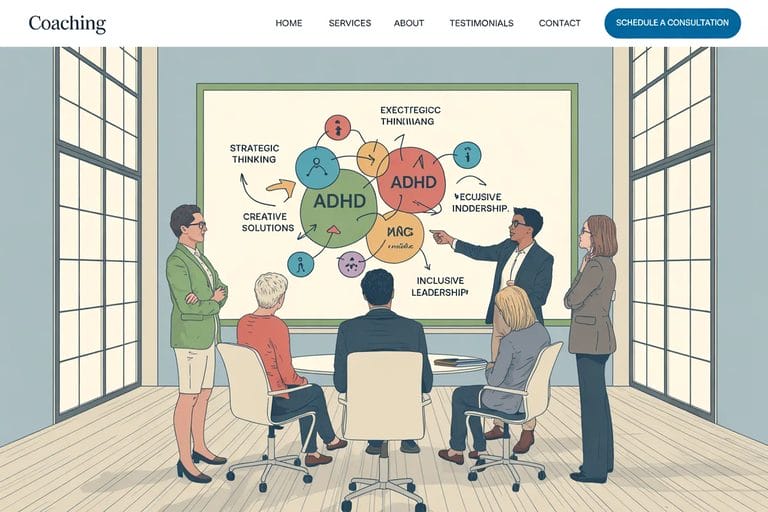
The Truth About ADHD at Work: Myths, Misconceptions, and the Real Story

The Truth About ADHD at Work: Myths, Misconceptions, and the Real Story

Read article →
Coaching Session Blueprints: What ADHD-Informed Executive Coaching Really Looks Like

Coaching Session Blueprints: What ADHD-Informed Executive Coaching Really Looks Like

Read article →
Executive Function Strategies for ADHD Leaders: Working Memory, Impulse Control & Flexibility

Executive Function Strategies for ADHD Leaders: Working Memory, Impulse Control & Flexibility

Read article →
ADHD Executive Mentorship: Building Support Networks

ADHD Executive Mentorship: Building Support Networks

Read article →
Weekly Scrum Interview Question - What is the Sprint Length?

Weekly Scrum Interview Question - What is the Sprint Length?

Read article →