A structured, ADHD-informed planner that turns fitness goals into simple weekly steps, helping you stop restarting and build consistent habits.
Free, print-ready PDF.
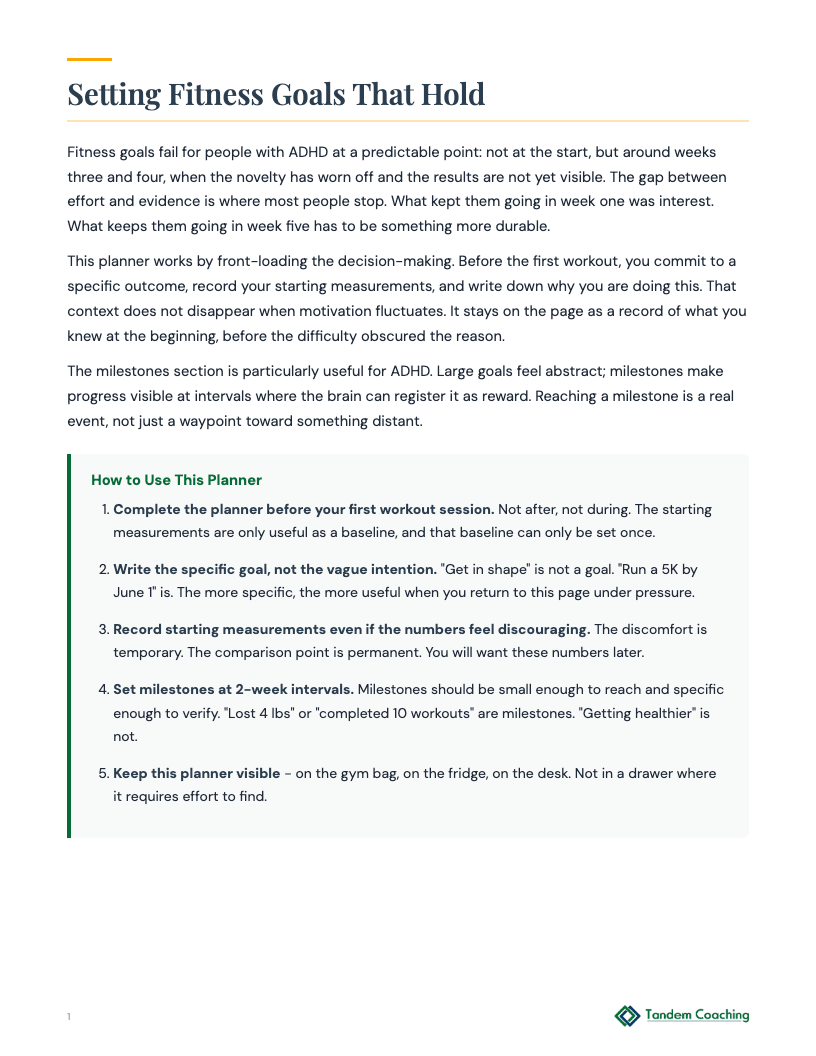
Before tracking workouts, it helps to define what you're working toward. This planner separates minimum goals from stretch goals, adds measurements, and builds in milestone markers.
A marketing director who downloads a new fitness app every few months, follows it intensely for 2-3 weeks, then abandons it when progress slows. Has tried six different programs in the past year. Came to coaching because the pattern is affecting confidence in other areas.
Frame this as breaking the restart cycle, not setting better goals. 'Before we pick your next approach, let's map what success actually looks like over time.' Most app-cycling clients resist writing down measurements because they've been disappointed before. Name that: 'The reason to record starting numbers isn't optimism - it's so you can see progress when the app says you're failing.'
Client fills in maximum goal quickly but struggles with minimum goal. This signals all-or-nothing thinking. Watch whether they write measurements in the 'Start' column during the session or leave it blank 'to do later.' Blank means they're already planning the next restart. The Motivation section reveals whether they're chasing a feeling or a capability.
Start with the gap between minimum and maximum goals. If the gap is huge, the client is setting up another restart cycle. Ask: 'What would have to be true for the minimum goal to feel like real success?' Then move to milestones. Most app-cyclers set milestones based on app timelines, not their own patterns.
Client cannot articulate why they want fitness beyond vague health benefits, or their motivation centers entirely on appearance/weight loss with emotional intensity. Moderate severity. This may indicate body image issues or external pressure that coaching alone won't address. Continue but explore the source of the 'should' behind the goal.
A software team lead who managed ADHD symptoms through gym routines pre-2020. Gained 40 pounds working from home, tried to restart old workout habits multiple times but can't sustain them. Executive function has declined along with fitness. Seeks coaching to rebuild both.
Position this as rebuilding executive function through fitness structure, not just weight loss. 'Your old routine worked because it gave your brain external structure. We need to design that structure into your new reality.' ADHD clients often resist the milestone section because it feels like more deadlines. Reframe: 'These aren't deadlines - they're dopamine delivery dates.'
The minimum/maximum goal spread reveals their relationship with ADHD perfectionism. A tiny minimum suggests shame about current capacity. A huge maximum suggests they're planning to hyperfocus their way to success. Watch how they fill the 'I want this because' section - ADHD clients often write what they think they should want rather than what actually motivates them.
Start with the motivation section, not the goals. Ask: 'Read me what you wrote for why you want this. Now tell me what you didn't write but were thinking.' The unwritten motivation is usually about executive function, energy, or self-respect. Then connect that to milestones: 'Which of these checkpoints would give you that feeling first?'
Client's motivation centers entirely on returning to pre-pandemic self or undoing pandemic changes. High severity if combined with shame language about current state. This suggests grief about lost capacity that may need therapeutic support before coaching can be effective. Pause and explore whether they're mourning their old life or building a new one.
A regional sales manager whose team is underperforming. Instead of addressing team issues directly, has become obsessed with personal fitness goals and tracking. Presents fitness planning as leadership development but uses it to feel in control when work feels chaotic.
Don't challenge the fitness focus directly - use it as leadership practice. 'Let's build this fitness plan the same way you'd build a sales plan for your team.' Watch for resistance when you connect fitness planning to work planning. The client may deflect with 'this is about personal health, not work.' That deflection is the coaching conversation.
Client fills out milestones with obsessive detail but keeps motivation section vague or work-related ('to be a better leader'). They may set unrealistic timelines that mirror their approach to sales targets. Watch whether they can articulate what fitness success feels like versus what it proves about their discipline or control.
Start with milestones and ask: 'How did you decide on these dates?' Then connect to their management style: 'When you set targets for your team, do you use the same timeline logic?' The parallel usually surfaces their avoidance pattern. The question that opens this up: 'What would change about your leadership if this fitness plan succeeds versus if it fails?'
Client cannot separate fitness goals from work performance or uses fitness language to describe leadership challenges ('my team needs more discipline'). Moderate severity. This suggests they're using personal control to avoid systemic work problems. Continue coaching but name the pattern and explore whether fitness is the right starting point.
A nurse practitioner returning from three-month burnout leave. Believes getting back into fitness routines will prevent future burnout. Has medical knowledge about exercise benefits but treats fitness planning like medical compliance rather than personal choice.
Frame this as designing sustainability, not proving recovery. 'This isn't about getting back to where you were - it's about building something that works with your current reality.' Healthcare clients often approach fitness like patient education. Interrupt that: 'You know the medical benefits. What we're designing here is what you'll actually do, not what you should do.'
Client writes clinical language in motivation section ('cardiovascular health,' 'stress reduction') rather than personal desires. They may set minimum goals that are still ambitious because they're thinking about medical recommendations, not their actual capacity. The measurements section may trigger medical thinking about 'healthy ranges' rather than personal progress.
Start with the motivation section and ask: 'This sounds like patient education materials. What would you write if you weren't a healthcare provider?' Then move to minimum goals: 'Your minimum goal is what most people would call ambitious. What would failure actually look like?' This usually reveals their fear of not being 'good enough' at self-care.
Client cannot articulate fitness motivation beyond preventing burnout or uses medical language to describe all personal choices. Moderate severity. This suggests they're still in clinical mode about their own life, which may indicate incomplete recovery from burnout. Continue but explore whether they can access non-medical desires.
Client has broad intentions but hasn't translated them into concrete, named commitments
ADHDADHD adult who wants to save but hasn't connected savings goals to meaningful reasons
WellnessClient has a vague sense of needing to take better care of themselves but hasn't defined what that means across different dimensions