
Personal Wellbeing Reflection
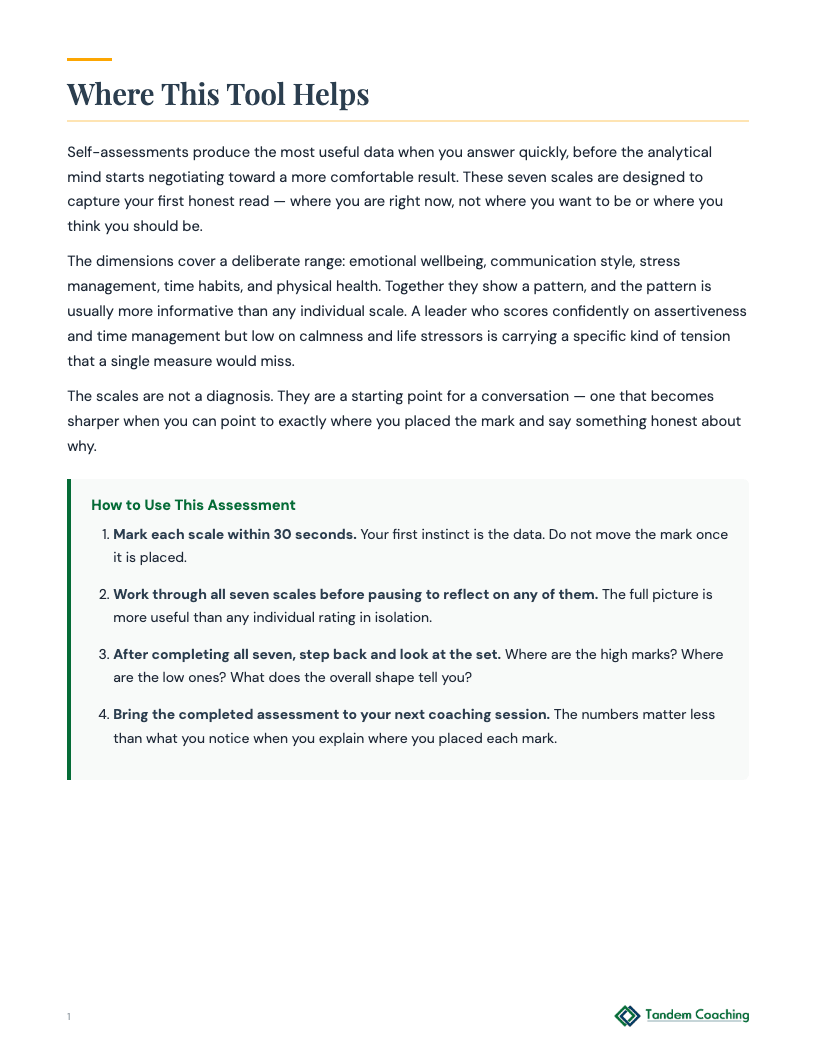
Get a fast, structured snapshot of your leadership style and how it impacts key life wellbeing areas, based on established leadership frameworks.
Get This Tool
Free, print-ready PDF.
When to Use This Tool
A client wants a non-diagnostic snapshot across self-esteem, mood, assertiveness, calmness, stress, time management, and lifestyle
A client wants to identify one wellbeing area to discuss without calculating a clinical score
A client needs to separate personal wellbeing reflection from leadership-style assessment
How to Introduce This Tool Plus
Which wellbeing scale was hardest to mark, and what context would help you discuss it without treating the result as a diagnosis?
Coaching Tool Disclaimer
This tool is designed for coaching contexts, not clinical use. If you or your client is in crisis, contact the 988 Suicide and Crisis Lifeline (call or text 988) or Crisis Text Line (text HOME to 741741).
Browse All Pages
Tool Classification
Domain
Life Coaching
Type
Assessment
Phase
Discovery
Details
15 min
Between sessions
Monthly
Topics
Identity
Self-Care
For the Coaching Practitioner
Plus
Coaching Scenarios
Plus
1 Senior manager promoted to director struggles with imposter syndrome ▶
Context
A finance director promoted six months ago after 12 years as a senior manager. Reports feeling overwhelmed by executive team meetings and questions whether they belong at this level. Requested coaching to 'get more confident in leadership situations.'
How to Introduce
Frame this as a baseline check, not a confidence assessment. 'Before we work on executive presence, let's see where you're starting from across the fundamentals.' Expect resistance to the self-esteem scale - many new executives think admitting low self-worth disqualifies them from leadership. Normalize it: 'Most people in role transitions have mixed ratings here.'
What to Watch For
Speed of completion on self-esteem and assertiveness scales. If they hover for more than 30 seconds on either, they're managing their image rather than reporting their experience. Watch for clustering - all marks in the middle suggests they're avoiding honest assessment of both strengths and struggles.
Debrief
Start with the scales they marked fastest - those are the most honest data points. Then ask: 'Which rating would your team be most surprised by?' This moves from self-perception to external reality. The gap between how they see themselves and how others see them often explains the imposter syndrome pattern.
Flags
If self-esteem is marked in the 'very low' range and life stressors are 'out of control,' the promotion may have triggered something deeper than role adjustment. Severity: moderate. Response: explore whether the client has support systems outside work and assess if the coaching goals need to shift from performance to stability.
2 High-performing sales VP rates everything positively despite obvious burnout signs ▶
Context
VP of Sales who exceeded targets three years running but shows clear burnout symptoms - cancelled meetings, delayed responses, team complaints about availability. Insists they just need better systems and delegation strategies.
How to Introduce
Present as a calibration tool, not a wellness check. 'You're saying the issue is systems, but let's get a read on the full picture first. Sometimes what looks like a process problem has other factors.' Expect them to rate everything in the moderate-to-high range. Don't challenge the ratings during completion - the pattern will speak for itself.
What to Watch For
Look for disconnect between their ratings and their presentation. If they mark 'calm' and 'healthy lifestyle' as moderate or high while displaying obvious stress indicators, they're either disconnected from their physical state or performing competence. Note which scale takes longest - that's where the real struggle lives.
Debrief
Start with the highest rating and ask for evidence: 'You marked time management as organized. Walk me through yesterday.' The specifics will reveal the gap between self-perception and reality. Then move to: 'What would need to change for you to move one of these ratings down honestly?'
Flags
Client rates calmness and stress management as moderate or high while showing clear burnout symptoms during the session. This suggests either significant self-awareness gaps or active denial of their physical state. Severity: high. Response: address the disconnect directly and assess whether they're coachable in their current state or need medical/therapeutic support first.
3 New team lead with ADHD struggles with executive function demands ▶
Context
Recently promoted team lead in software development with ADHD diagnosis. Excelled as individual contributor but now struggles with meeting schedules, project tracking, and team check-ins. Believes they need better organizational systems.
How to Introduce
Frame as a snapshot before building systems: 'Let's see where you are across the basics before we design your management approach.' The time management and life stressors scales will likely trigger shame about ADHD symptoms. Normalize this upfront: 'These scales capture where you are now, not where you should be. ADHD brains work differently - we'll use this data to build systems that work with your wiring, not against it.'
What to Watch For
The 30-second rule may not work for ADHD clients - they may hyperfocus on getting the 'right' answer or rush through without processing. Watch for extreme ratings on time management (either very low from shame or artificially high from masking). Note if they mark calmness as low but can't articulate specific stressors.
Debrief
Start with their strongest rating and ask what makes that area work: 'You marked assertiveness as high. What does that look like day-to-day?' Then contrast with their lowest rating: 'Time management is marked low. What happens in your brain when you try to organize?' This helps separate ADHD-related challenges from learnable management skills.
Flags
If life stressors and time management are both marked as 'out of control' or 'disorganized' while self-esteem is very low, the client may be experiencing ADHD-related overwhelm that coaching alone won't resolve. Severity: moderate. Response: continue coaching but assess whether they need ADHD-specific support, medication review, or therapeutic intervention for executive function challenges.
4 Department head discovers leadership style doesn't match new organizational culture ▶
Context
Operations director at a traditional manufacturing company acquired by a tech startup. New parent company emphasizes collaboration and psychological safety, but client's directive management style is creating friction. Thinks the problem is that employees need to adapt faster.
How to Introduce
Position as a culture-fit diagnostic: 'Before we work on change management, let's see how your current approach maps to what the new culture requires.' They'll likely rate assertiveness high and see it as a strength. Don't correct this during the tool - let the data create the conversation about when assertiveness becomes a liability.
What to Watch For
Watch for high ratings on assertiveness and time management paired with lower ratings on calmness. This pattern often indicates someone who gets results through control and urgency. Note if they struggle with the happiness scale - many traditional managers haven't considered emotional state as relevant to leadership effectiveness.
Debrief
Start with their assertiveness rating: 'You marked this as high. Give me an example from this week.' Then ask: 'How do you think your team would rate your assertiveness?' The gap between self-perception and team experience often explains the culture clash. Follow with: 'What would assertiveness look like in the new culture?'
Flags
If assertiveness is marked very high while calmness is low and they show no awareness of the impact on others, they may have an authoritarian leadership style that's incompatible with collaborative cultures. Severity: low to moderate. Response: continue coaching but assess whether they're willing to examine their impact on others or if they're seeking coaching to make others adapt to their style.
Tool Flow
Plus
Requires
- None - standalone tool
→
Produces
- seven individual wellbeing reflections
- context notes for high and low marks
- questions for coaching or licensed support
Pairs Well With
Life
Optional Multi-Area Goals Reflection
A client wants to use Optional Multi-Area Goals Reflection as an optional reflection
Why it pairsOnce the assessment names which wellbeing dimensions are lagging, this worksheet channels those gaps into concrete goals the client can actually track.
LifeOptional Multi-Area Goal Notes
Use this worksheet to explore values and identity and turn the client’s observations into one optional next step.
Why it pairsThe rated gap pattern from the assessment gives this worksheet a ready-made priority order so the client isn't starting domain goals from scratch.
WellnessWhole-Life Satisfaction Wheel
Client is performing in multiple life areas but feels an undefined sense of imbalance or emptiness
Why it pairsRunning both back-to-back surfaces whether the client's wellbeing gaps align with - or contradict - their broader life satisfaction ratings across eight domains.
Related Articles

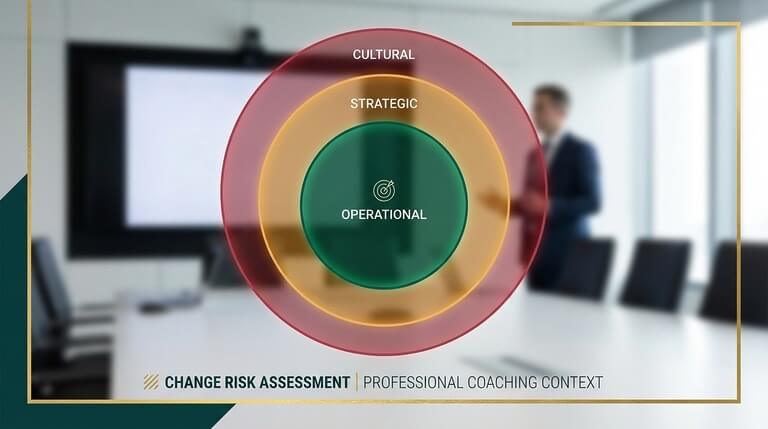
Change Management Risk Assessment: The Leadership Dimension Most Teams Skip
Read article →
Professional Formation Is Not Personality
Read article →
Benefits of Leadership Development Programs - Unveiled for Corporates
Read article →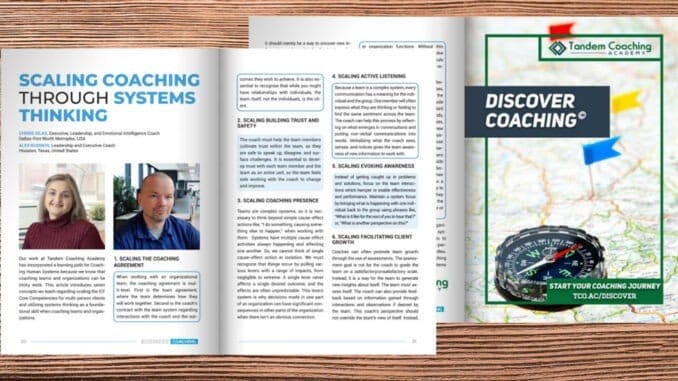
Scaling Coaching Through Systems Thinking
Read article →