DBT FAST Skill

A client tends to apologize, over-explain, or compromise their values to keep the peace
Worksheet · 15 min · Print-ready PDF · Free download

Get This Tool

Free PDF - professionally formatted, ready to print or fill digitally

Preview Worksheet · 15 min
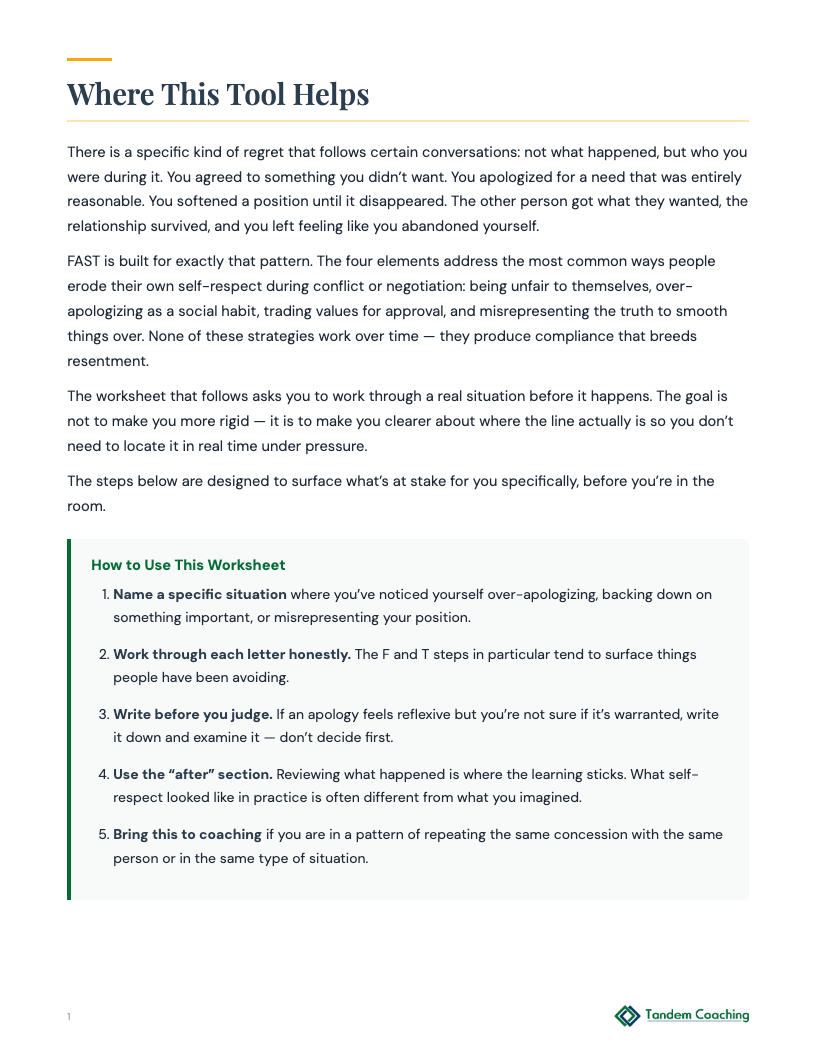
DBT FAST Skill - preview
When to Use This Tool
A client tends to apologize, over-explain, or compromise their values to keep the peace
Someone who wants to hold their ground without damaging the relationship
Practicing Fair, No Apologies, Stick to Values, and Truthful in a real situation
How to Introduce This Tool Plus

When you're in a difficult conversation, where do you tend to lose yourself — ov...

🔒 Unlock with Coaching Tools Plus →
Coaching Tool Disclaimer
This tool is designed for coaching contexts, not clinical use. If you or your client is in crisis, contact the 988 Suicide and Crisis Lifeline (call or text 988) or Crisis Text Line (text HOME to 741741).
Browse All Pages
Interactive Preview Worksheet · 15 min
Tool Classification
Domain
Relationships
Type
Worksheet
Phase
Action
Details
15 min Mid session As-needed
Topics
Identity Communication

For the Coaching Practitioner

Plus
Pathway Builder 🔒
Coaching Scenarios Plus
1 Manager who apologizes reflexively and then resents having done it
Context

A senior manager opens almost every difficult conversation with an apology — for the request, for the timing, for taking up space. She is aware of it, has tried to stop, and cannot. The apologies are followed within hours by resentment toward the other person for accepting them.

How to Introduce

Position the A (No Apologies) step as the diagnostic, not the goal. 'The worksheet asks you to write down every apology ...

2 VP who compromises values in executive team conversations to maintain standing 🔒
🔒
4 coaching scenarios with introduction language, observation guides, debrief maps, and red flags
Unlock with Coaching Tools Plus
For professional coaches and coaching practitioners
Tool Flow Plus
See what this tool requires and produces in a coaching engagement
Unlock with Coaching Tools Plus

Pairs Well With

Executive

Johari Window

A client wants to understand how others perceive them versus how they see themselves

30 min Framework
🔒
+3 more with Plus

Related Articles

The Truth About ADHD at Work: Myths, Misconceptions, and the Real Story

The Truth About ADHD at Work: Myths, Misconceptions, and the Real Story

Read article →
The Power of Active Listening in Coaching: A Guide to Transforming Client Relationships

The Power of Active Listening in Coaching: A Guide to Transforming Client Relationships

Read article →
Improving Your Relationships: The Role of a Relationship Coach

Improving Your Relationships: The Role of a Relationship Coach

Read article →
ICF Core Competencies: Co-Creating the Relationship

ICF Core Competencies: Co-Creating the Relationship

Read article →
Executive Team Coaching: What It Is, How It Works, and When Your Team Needs It

Executive Team Coaching: What It Is, How It Works, and When Your Team Needs It

Read article →
When NOT to Use Team Coaching: 3 Conditions That Predict Failure

When NOT to Use Team Coaching: 3 Conditions That Predict Failure

Read article →