The HR Formation: When Care and Commerce Share the Same Anchor
How should HR balance care and commerce?
The HR formation cannot resolve this tension by choosing sides — both care and commerce are the anchor. The coaching work builds capacity to navigate: knowing when people-right serves business, when business-right demands translating the human cost, and when genuine conflict requires judgment rather than formula. Abandoning either side breaks the function.
Key Takeaways
- The HR formation is the only one with a built-in contradiction at its core: people advocacy AND business alignment. This tension is the formation itself, not a developmental gap to resolve
- Relational mapping is the structuring logic - "How will this affect people? Who is connected to whom?" The trained blind spot: business constraints behind decisions the formation experiences as unfair
- Coalition-building is not avoidance. When your CHRO client keeps building alliances instead of asserting authority, the formation is operating within influence-without-authority - the structural position HR inhabits
- Under stress, the formation intensifies (over-mediating, inserting into conflicts, generating more process) or collapses (stops advocating, goes silent). Silence from the people voice often means the formation has cracked
- "Be tougher" is the single most counterproductive coaching move for this formation. The path to CHRO effectiveness runs through translating people insight into business language - not abandoning the people lens
Say you are coaching a CHRO who keeps describing their strategic initiative in terms of "getting buy-in" and "building coalitions." Three sessions in, the strategy has not moved. You might read this as a confidence issue - the client needs to be more assertive, more willing to push their position. But the HR formation installs influence-without-authority as a defining power dynamic. Coalition-building is not avoidance. It is how this formation learned to create change in a system where they rarely have direct authority over the decisions they are trying to shape. The question that opens the conversation is not "What would it look like to be more direct?" It is "What would it mean for you to have authority here - not just influence?"
Twenty years of people advocacy, employee relations, organizational development, and the chronic question of "whose side am I on?" install something specific in a person. Not merely a preference for people - people as identity. The HR professional who has spent two decades in a world where caring about organizational health defines professional worth does not merely value fairness. Fairness has become a load-bearing part of how they see themselves, how they evaluate decisions, and how they interpret organizational friction. This is the HR formation. And it is the only one in the IMPRINT model with a structural contradiction at its center: the people-champion identity is genuine - built on a real belief that organizations succeed through people. But the business requires decisions that sometimes hurt people. Every other formation can resolve internal tensions by choosing their anchor. HR cannot, because both sides of the tension ARE the anchor.
This is Chapter 16 in the formation-coaching cluster - the sixth of seven functional formation profiles. The Identity Architecture chapter mapped how tightly professional identity fuses with self-concept. Here, that architecture contains something unique: a values-based identity at moderate fusion that holds an inherent contradiction. The coach who understands this hears the client differently. "I'm caught between what's right for people and what the business needs" is not indecision. It is the formation's defining structural strain speaking.
Seven Dimensions Through a Relational Lens
The HR formation produces a moderate identity fusion anchored to values - "I care about people and organizational health." The advocacy identity is genuine. What makes it coaching-relevant is the built-in contradiction: being the people champion while serving the business. When these two pull in opposite directions, the formation experiences identity strain that other formations rarely encounter. The CFO can always choose precision. The CTO can always choose the best technical solution. The CHRO sometimes cannot choose, because both sides of the tension define who they are.
Make Relational Mapping Land in the C-Suite
Turn trust indicators and people-impact analysis into a clear business case. A consult can help you find the language your decision-makers will hear.
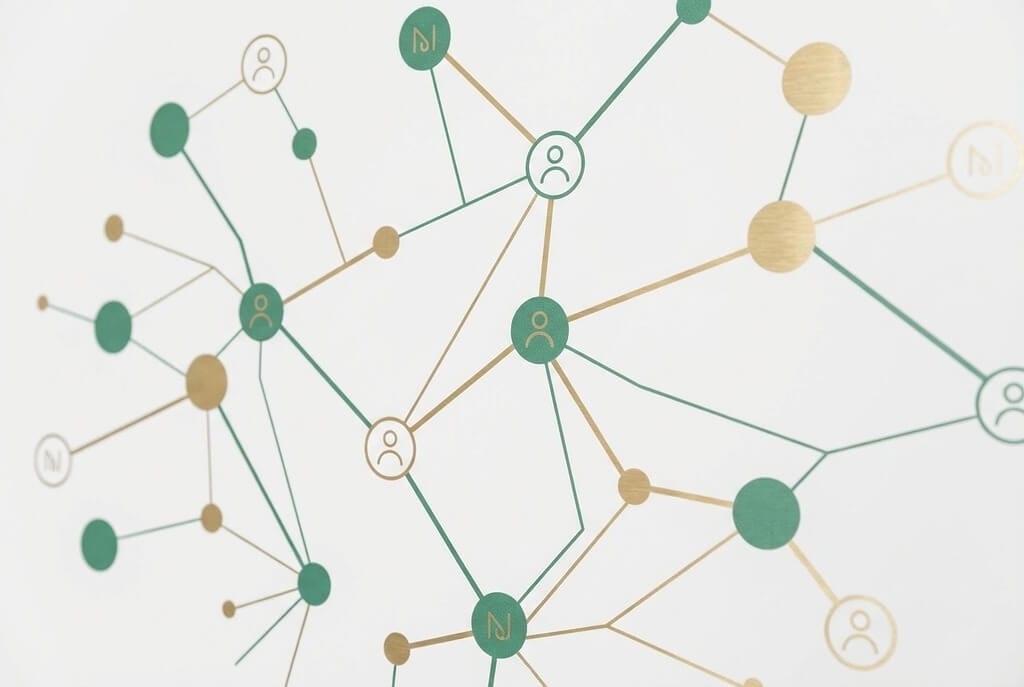
Information Processing follows the formation's relational orientation. The structuring logic is relational mapping - "How will this affect people? Who is connected to whom? What is the second-order human consequence?" Every proposal, reorganization, and strategic initiative gets traced through its human impact network. This is not emotionality. It is a cognitive tool that sees consequences other lenses systematically miss - the morale impact of a restructuring, the trust erosion of a poorly communicated policy, the second-order effects on retention when a valued team member is moved. The epistemic standard is employee sentiment, trust indicators, and conversation quality. When your client says "people are nervous about this," they are reporting data from a signal channel most of the C-suite cannot read.
The trained blind spot sits opposite the relational lens: business constraints behind decisions the formation experiences as unfair. The structural and financial realities that make the humane option genuinely unaffordable. When the CEO explains that the layoff is financially necessary, the HR formation hears the people impact first and may struggle to integrate the business constraint - not because they cannot understand a balance sheet but because their formation was not trained to weight financial evidence the way the CFO's was. The coaching work is not teaching your client to think like a CFO. It is helping them see what their relational lens is filtering out so they can translate their people insight into language the decision-makers can act on.
Natural Time Horizon is longer than most coaches expect. Culture change takes years. Talent pipelines span decades. Succession planning operates in generational cycles. The HR formation is patient by design - their domain genuinely moves at this pace. But the horizon is bimodal with a structural gap: strategic work operates in years-to-generations while crisis management collapses to hours (terminations, workplace incidents, compliance violations). The 3-18 month medium zone - where most operational HR decisions actually live - is where the formation is least developed. When your client seems to oscillate between long-horizon vision and short-horizon firefighting, the gap in the middle is where coaching can build fluency.
The HR formation does not lack business acumen. It expresses business insight through relational mapping, people-impact analysis, and trust indicators. The coach who mistakes the form of business thinking for the absence of business thinking will spend three sessions solving a problem that does not exist.
Power Dynamics defines the HR formation's structural position more than any other dimension. This is an advisory function operating through influence without authority. The CHRO mediates, advises, enables - but rarely decides. The anxiety: when leaders bypass HR, politely shelve recommendations, or treat the function as a service desk rather than a strategic partner. At Director/VP level, the environment broadcasts business-impact signals - whether their people insight translates into measurable outcomes, whether leaders see them as a strategic partner or a support function. The formation is still tuned to relational quality. They may interpret being sidelined as "they don't value people" rather than "I haven't connected my people insight to business language."
Measures of Success compound the power challenge. The HR formation's signal feedback is slow, relational, subjective, contested, and impossible to attribute cleanly. At CHRO level, the environment broadcasts organizational-systems signals - board evaluates talent pipeline, succession readiness, and culture as strategic assets. But the formation is still tuned to employee sentiment and trust. Your client may maintain beautiful relationships while the organization outgrows the structures they are advocating for.
Risk means people-harm. The formation weighs every decision through fairness and impact - what this will do to humans, whether psychological safety is preserved, whether the process is equitable. This can be perceived as risk-aversion by other C-suite members, but the reality is the CHRO is weighting a different variable set. The risk they see is real. It is simply not the same risk the CFO or CTO is tracking. Trust Currency at the CHRO level requires building the human capability the strategy requires - culture architecture, workforce strategy, board-level people narrative. The painful shift: people advocacy must evolve into organizational strategy. Empathy must be complemented by business rigor. Being liked must matter less than being effective.
When the People Advocate Intensifies
When the HR formation comes under stress, two patterns emerge. The more common one is visible but often misread as dedication.
Intensification means the people-advocacy identity hardens. Your client inserts themselves into more situations as the "people voice." Over-mediates conflicts that could self-resolve. Generates more process around every people decision - more check-ins, more "how are you doing" conversations, more pulse surveys. Reads every interaction for emotional subtext. Over-invokes the people-wellbeing mandate to slow or block business decisions that the formation cannot influence through other means. To colleagues, this looks like the CHRO caring deeply. To the coach who understands the formation, it looks like anxiety speaking through the only channel the formation trusts.
The over-mediation pattern is the coaching signal. When your client describes inserting themselves into a conflict between two directors, the question is not whether they were helpful. The question is whether the conflict would have self-resolved - and whether the formation's anxiety about people-harm drove the intervention more than the situation required it. This connects to the shared pattern with the Operations formation: both formations have a structural invisibility problem. When HR works well, conflicts get resolved before they escalate, culture hums, and talent stays. Nobody notices. When HR fails, everyone notices. This creates an identity built on invisible excellence - and a recognition hunger that the over-mediation pattern partly serves.
Collapse is rarer but more coaching-relevant. A culture initiative the client championed leads to worse outcomes. A reorganization they designed damages trust rather than building it. The "I develop people and protect culture" identity shatters. Two collapse expressions: the client stops mediating, stops advocating - "It's not my call" from someone whose entire professional identity is built on it being their call. Or they make a people decision purely on business grounds without the usual values-based analysis, surprising colleagues and themselves with sudden coldness. When the advocate goes quiet, the formation has cracked.
ICF Competency 3 - Establishes and Maintains Agreements - takes on specific meaning here. The HR formation may agree to coaching goals that serve the business side of the contradiction while their formation pulls toward people advocacy. "I want to be seen as more strategic" may be what they contract for. What the formation actually needs is the ability to hold the contradiction without collapsing into either side. The coach who takes the stated goal at face value may spend six sessions building business acumen while the real coaching work - navigating the structural tension between care and commerce - goes unaddressed.
The Misreads That Deepen the Strain
Four patterns where coaches consistently misread the HR formation. Each one deepens the structural strain the client already carries.
"You need to be tougher" or "Stop being the people pleaser." This frames people advocacy as weakness when it is a formation-level value system built over decades of professional immersion. What is actually happening: the client's care for people is not softness. It is the cognitive and emotional architecture their career installed. Many CHROs are among the toughest decision-makers in the C-suite - they simply weight different variables than the CFO does. The better coaching move: "The tension between people advocacy and business alignment is not a weakness in you - it is the tension your function lives inside. When those two pull in opposite directions, how do you decide which way to go?"
"Connect your recommendations to business outcomes." This assumes the client fails to think commercially when the real issue is linguistic, not conceptual. What is actually happening: HR leaders often do connect to business outcomes internally - but their formation trained them to present through a people-first lens because that is the language that earns trust within their function. The translation challenge is parallel to what finance leaders face in reverse: the CFO must translate numbers into narrative, the CHRO must translate people insight into business language. Neither lacks the other's thinking. Both lack the other's vocabulary. The better coaching move: "If you were presenting this recommendation to the CFO, what language would make them lean in? What is the version of your insight that lands in their world?"
"You're making this too personal." This dismisses the relational lens as emotionality when it IS the cognitive tool that sees consequences other lenses miss. What is actually happening: when your HR client traces the human impact of a decision through three levels of the organization, they are applying the same structured analysis the CFO applies when running a scenario model. The currency is different. The rigor is comparable. The better coaching move: "You are seeing the people impact that others are missing. How do you translate that insight into language the decision-makers can act on - without losing the human dimension that makes your perspective valuable?"
"You need to be more decisive." This asks the enabler to become a decider, which violates the structural position. What is actually happening: the HR formation sits in the advisory architecture. They mediate, advise, enable. Decisiveness as other functions experience it - the CFO who calls the number, the CTO who picks the architecture - is not available in the same way when your authority is relational rather than positional. The better coaching move: "What would it look like to influence this decision so strongly that the outcome feels like yours - even though someone else announces it?"
Questions for the People Lens
The same coaching intent expressed two ways - one the HR formation can hear, one that bounces off the formation's architecture.
Questions that miss:
- "What does your gut tell you?" - the relational data IS their gut. The formation's instinct runs through people-impact mapping the way the CFO's instinct runs through scenario modeling. Make the relational data explicit rather than asking them to bypass it
- "Just make the call" - ignores the structural position of influence-not-authority. They cannot "make the call" in many situations because the decision architecture does not give them that authority. What they can do is shape the call
- "Don't take it personally" - everything IS personal when people-advocacy is identity. This dismissal tells the formation that the thing it cares most about does not matter. The client will comply by suppressing the relational read, which removes the most valuable signal channel in the room
Questions that land:
- "What would change if every person on that team were performing at their best? Would the outcome be different - or would the same structural constraint produce the same result?" - this honors the people lens while surfacing the possibility that the problem may be structural rather than human
- "You have identified the people dynamics clearly. What is the business case for the people investment? Not because you need one to care, but because the audience you are presenting to needs one to act" - names the translation work without dismissing the relational insight
- "When the people-right answer and the business-right answer are different, what does your formation want you to do? And what does the role actually require?" - surfaces the structural contradiction explicitly, which gives the client language for something they have felt but may not have named
The pattern across all three: the questions that land use the formation's own language and epistemic standards. They do not ask the client to become someone else. They ask the client to extend what they already are. This is what the waterline principle looks like in practice: the coach uses formation awareness to ask sharper questions, not to teach the client about their formation.
Coaching the Contradicted Formation
The HR formation requires a coach who can hold the contradiction without trying to resolve it. The advocacy/alignment tension is the formation, not a developmental gap. "Be tougher" resolves the tension by abandoning one side. "Just focus on the people" resolves it by abandoning the other. Neither works, because the CHRO's role requires holding both. The coaching work is building the client's capacity to navigate the tension - to know when the people-right answer serves the business, when the business-right answer requires translating the people cost, and when the two genuinely conflict in ways that demand judgment rather than formula.
Before the session, review which dimension is likely under stress. If the presenting issue is "my recommendations keep getting shelved," the signal lag pattern is operating - the client is reading relational quality while the environment is broadcasting business-impact. If the issue is "I inserted myself into a conflict and it got worse," the power dynamics and stress intensification are interacting - the advisory position plus the people-protection instinct plus the anxiety of influence-without-authority are driving over-mediation.
Come prepared to honor the relational lens while expanding the translation skill. Not "stop caring about people" but "what is the business case for the care you already provide?" Not "be more strategic" but "what would your people insight sound like in the CFO's language?" The HR formation does not need to become something else. It needs to become more of what it already is, at a higher level. People advocacy serving organizational strategy. Relational mapping informing business decisions. The people lens translating into language the board can act on. For how this formation looks from the client's perspective - the experience your HR leader may recognize but not yet have language for - see Coaching CHROs in the companion cluster. For how executive coaching supports leaders navigating these structural tensions, the formation-aware approach makes the difference between coaching that scratches the surface and coaching that reaches the architecture beneath.
Unstuck Your Coalition-Building Strategy
Bring your CHRO challenge—relational mapping, translation, or stress patterns—to a free consult and map the next best coaching move.
Book a Free Consultation →