
Future of Coaching Industry: What Training Programs Must Change
The coaching profession is growing. The International Coaching Federation (ICF) released its 2026 Coaching Futures Report in April, and the headlines are encouraging: more organizations using coaching, more people entering the field, more recognition that coaching produces measurable results.
But the report doesn't address a question that matters just as much: whether coach training programs are keeping up.
The signals from the past month tell a story. AI-powered coaching platforms are multiplying. The ICF is pushing for broader coaching impact and higher standards. Researchers are arguing that coaching capacity needs to extend beyond professional coaches and into leadership teams themselves. Each of these trends changes what a graduating coach needs to know and be able to do.
We run an ICF-accredited coaching program, and we've been watching these shifts closely. This isn't abstract industry forecasting. It's a practical look at what's changing and what coach training needs to change in response.
AI as Coaching Capacity - Not Coaching Replacement
Most professionals treat AI tools like a vending machine. They type a prompt, hope for something useful, and blame the tool when the output falls flat. A recent piece in CLO Magazine made a point that coaches and coach trainers should pay attention to: AI doesn't behave like traditional software. It behaves like a high-potential employee.
Want a Practical AI-in-Coaching Plan?
Get clarity on what to automate, what to protect (presence and ethics), and how to set standards and feedback loops that actually work.
The article identifies three levers that determine whether AI tools perform well: onboarding (giving the tool context about the work), setting clear standards (defining what good output looks like), and providing feedback (refining the tool's responses over time). Skip any of these, and the tool underperforms. Sound familiar? These are coaching skills.
For coach training programs, this has a direct implication. Graduating coaches will work in organizations where AI handles scheduling, session notes, progress tracking, and even initial assessments. Coaches who can't work alongside these tools will be at a disadvantage. Coaches who can manage AI the way they'd manage a skilled but inexperienced team member will add more value.
This doesn't mean training programs need to teach prompt engineering. It means they need to teach coaches how to think about AI as capacity rather than competition. The coach's role doesn't shrink when AI handles administrative tasks. It sharpens. More time for presence, for the kind of deep listening that no algorithm replicates, for the ethical judgment calls that require human experience and wisdom.
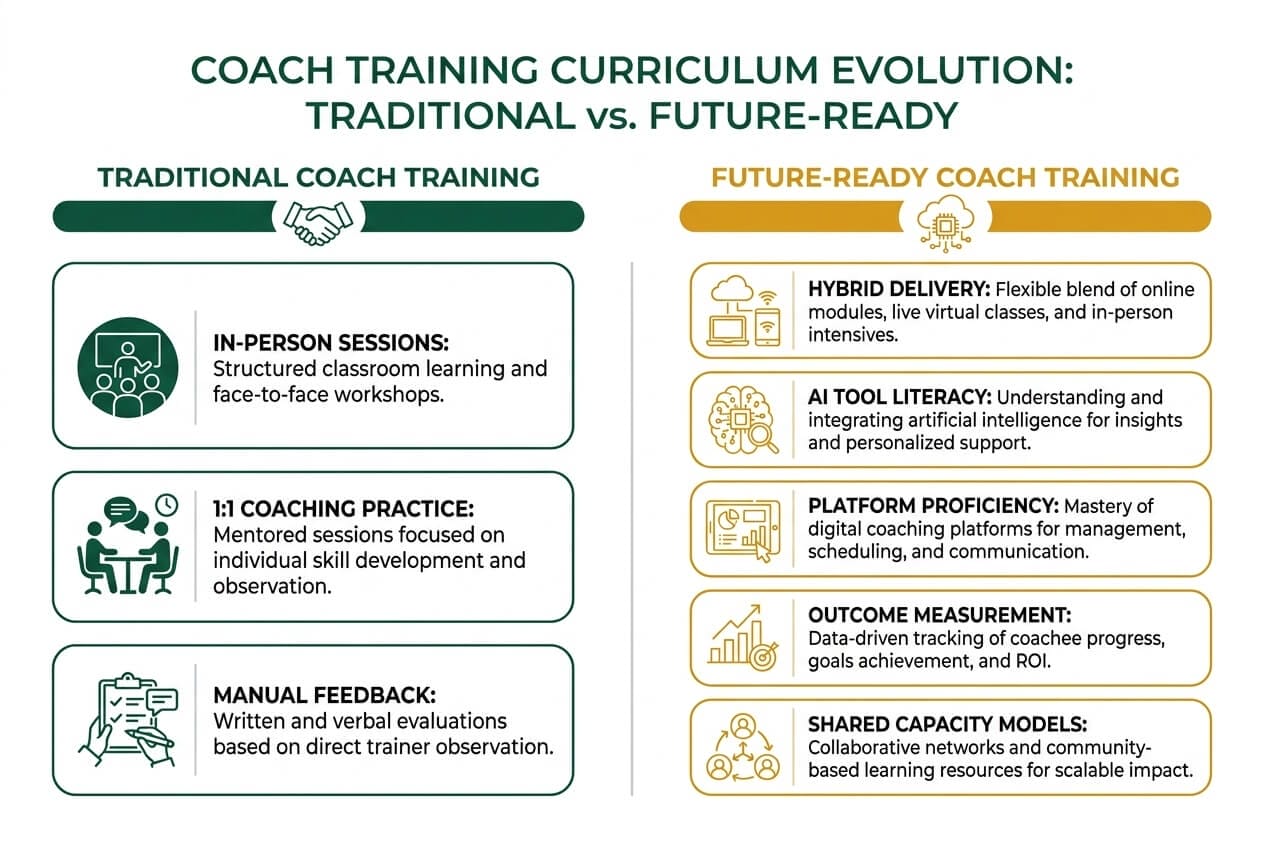
The training implication is concrete: programs should include modules on AI tool literacy. Not "how to use ChatGPT" but how to evaluate AI coaching tools critically, how to maintain ethical practice when technology enters the coaching relationship, and how to help clients think clearly about AI's role in their own work.
The Shared Coaching Capacity Shift
Jennifer Britton, writing for The Coaching Tools Company, argues that building coaching capacity in leaders and peers matters more than ever. Her point: as AI handles more transactional work, the distinctly human skills of coaching become more valuable across organizations, not just in formal coaching engagements. Listening. Asking questions that open new thinking. Holding space for someone to work through complexity.
This creates a real challenge for coach training programs. They've traditionally served one audience: people who want to become professional coaches. Now there's a second audience: leaders who want coaching skills but aren't pursuing credentials or building a coaching practice.
The temptation is to create separate, lighter programs for the leader audience. The risk is dilution. When you strip coaching training down to a weekend workshop on "coaching skills for managers," you often lose the depth that makes coaching actually work. The practice hours. The mentor coaching. The self-awareness development that only comes from being coached yourself.
The better path is to design programs that serve both audiences without compromising on depth. A leader-coach doesn't need ICF credentials, but they do need enough training to use coaching skills responsibly. They need to understand the difference between coaching, mentoring, and managing. They need supervised practice, not just theory.
For ICF-accredited programs specifically, this means thinking about how their curriculum connects to organizational development. The coaching competencies don't change based on who's learning them. The context and application do.
Technology Is Expanding Possibility - Training Must Keep Up
The ICF's recent exploration of how technology is expanding coaching possibility paints an optimistic picture: virtual reality for immersive coaching scenarios, digital platforms that connect coaches with clients across time zones, data analytics that help measure coaching outcomes.
AI-powered coaching platforms have been proliferating. Trend Hunter flagged the growth of these platforms as a significant pattern - tools that offer AI-driven coaching conversations, automated goal tracking, and scalable coaching access for organizations that can't afford one-on-one coaching for every employee.
The gap between these technological realities and most coach training curricula is wide. Many programs still teach coaching as if every session will happen face-to-face in a quiet office. The curriculum covers coaching models, competencies, and practice hours, but rarely addresses the digital environment where most coaching actually happens now.
Coach training programs need to add several capabilities. Digital presence skills: how to create connection and psychological safety through a screen. Platform literacy: understanding the tools clients and organizations use. Virtual facilitation: techniques that translate coaching presence into digital formats. And perhaps most importantly, discernment about technology boundaries - knowing when a coaching platform helps and when it gets in the way of genuine human connection.
This doesn't require throwing out the core curriculum. The ICF competencies remain the foundation. But programs that ignore the technological context in which their graduates will practice are sending coaches out unprepared for the work as it actually exists.
What ICF’s Direction Signals for Training Standards
The ICF's International Coaching Week campaign and the broader push for collective impact signal something important about where professional standards are headed. The emphasis is on demonstrable results, wider reach, and coaching as a recognized profession with clear accountability.
For training programs, this translates to a specific shift: outcome measurement needs to become part of the curriculum, not an afterthought. Coaches who can articulate the results of their work in concrete terms - not just "my client felt better" but measurable changes in leadership behavior, team performance, or organizational metrics - will be the ones organizations continue to hire.
Training programs also need to prepare coaches for a more structured professional environment. Coaching supervision is becoming standard practice, not just a requirement for certain credentials. Programs that introduce supervision concepts early give their graduates an advantage. They understand the value of reflective practice and peer accountability from the start. For coaches pursuing the ICF's new Mentor Coach Specialization (formerly MCQ), programs that integrate supervision concepts and reflective practice from the start provide a direct path to meeting those requirements.
The profession is also becoming more deliberate about coaching ethics in complex contexts. When coaching involves AI tools, when coaches work with leader-coaches who aren't credentialed, when coaching platforms collect data about coaching sessions - the ethical questions multiply. Training programs that address these scenarios produce coaches who can handle the profession as it's becoming, not just as it was.
What Coach Training Programs Need to Do Now
The trends converge on a clear set of actions for coach training programs.
Curriculum additions that matter now. AI literacy belongs in every coaching program, not as a technology elective but as part of how coaches learn to work in modern organizations. Outcome measurement methodology should be taught alongside coaching skills, so coaches graduate knowing how to demonstrate their value. And digital coaching competencies, from virtual presence to platform navigation, need to be integrated into practice hours, not separated from them.
Delivery models need to evolve. Hybrid and asynchronous learning components aren't just a convenience. They're preparation for how coaching itself works now. When coaches learn through a mix of live sessions, recorded content, and virtual practice, they're developing the same delivery flexibility their clients will expect from them.
Mentoring and supervision in context. Mentor coaching has always been central to ICF-accredited programs. The opportunity now is to model tech-integrated practice within the mentoring relationship itself. When mentor coaches use AI tools for session prep, demonstrate digital coaching techniques, and discuss the ethics of technology in coaching, they prepare their mentees for practice as it exists today.
Preserve what works. None of this means abandoning the core of what makes coach training valuable. The ICF core competencies - establishing trust, active listening, powerful questioning, direct communication - these become more important as technology handles everything else. Coach training programs should invest more deeply in these human capabilities, not less. The foundation stays. The context around it changes.
What we're changing in our own programs. We wrote this article because we're doing the work, not just observing it. Our Level 1 and Level 2 programs are being rebuilt with AI integrated from day one - not as a separate module tacked onto the end, but woven into how coaches learn to facilitate sessions, handle ethical questions around AI disclosure, and work alongside tools that are already showing up in their clients' organizations. Our Coach Tools library gives coaches access to hundreds of structured coaching tools, and our AI-powered Pro tier helps coaches and clients find the right tool chains based on actual session goals - a concrete example of what AI literacy looks like in practice rather than theory. And through our Coaching Nest research, we're building outcome measurement directly into how we evaluate coaching engagements, so our graduates leave knowing how to demonstrate results, not just report on sessions. We're not claiming to have solved all of this. We are saying we've started, and we think programs that haven't started yet are running out of time.
The programs that will produce the most effective coaches in the next five years are the ones adapting their delivery and expanding their scope while protecting the depth that produces real coaching competence. That balance isn't easy. It is necessary.
Frequently Asked Questions
Will AI replace professional coaches?
AI tools will handle more of the administrative and transactional aspects of coaching: scheduling, session summaries, and progress tracking. But coaching's core value - human presence, deep listening, ethical judgment, and the ability to ask questions that shift someone's thinking - requires capabilities AI doesn't have. The profession isn't shrinking. The role is sharpening around what only humans can do.
How should aspiring coaches evaluate training programs in light of these trends?
Look for programs that address technology integration alongside traditional coaching competencies. Ask whether the curriculum includes digital coaching skills, AI literacy, and outcome measurement. Check if practice hours include virtual sessions, not just in-person work. And confirm the program teaches coaching ethics in the context of modern technology, not just traditional scenarios.
What does the ICF Coaching Futures Report mean for current coaches?
The report signals that the coaching profession is expanding in scope and accountability. For practicing coaches, it means investing in continuing education that includes technology skills, building the ability to measure and communicate outcomes, and staying current with evolving professional standards. Coaches who adapt to these shifts will find more opportunities, not fewer.
Is Your Program (or Practice) Future-Ready?
Talk through AI literacy, digital coaching competence, and outcome measurement—and map the smartest next step for you or your team.
Book a Free Consultation →